
 4 gibbles out of 5

Director: Hong-jin Na
I like movies that remind me that there is a way to tell stories we’ve heard or seen before in fresh and compelling ways without relying on some new technology or whoopy-doo camera trick to make it notable.
Tonally, ‘The Chaser’ reminded me of ‘The Square,’ an Aussie noir from a few years back that also just told a familiar story, but told it well. I was a bit more directly affected by ‘The Square’s unrelenting darkness and apt depiction of failed decision making, but ‘Chaser’ is, admittedly, a bit more unique in that it allows room for real life to step in with moments of comedy and ambiguity. It’s a bit harder to settle in to due to this ambiguity, but it still stands taller than the majority of its contemporary thriller brethren and as the ambiguity is a purposeful piece of its character and story, the feeling fits.
Joong-ho is, essentially, a pimp. We start the movie with him beating up a client who was mistreating one of his girls. You don’t find out much directly about Joong-ho. What you do find out is assumed through his actions, or can be inferred from conversations. He is a classic noir character in that his code of morals is maintained through his sometimes dastardly actions. One of his girls disappears with a client. He tries to find out where she went – for money, or for reprimanding – and discovers that several girls from several pimps have disappeared.
Here ‘The Chaser’ makes several impressive diversions from your “chase the killer” plot. First is that he finds him. He finds him after 30 minutes of the film. But even after a confession, there’s still no proof that the killer has done what he says, or what Joong-ho claims. We know, as a viewer, having witnessed the behind the scenes moments, and Joong-ho knows it in his gut, but there’s no proof. Secondly – people are intelligent, and the plot proceeds logically. There are some magic movie moments where so and so just happens to be in the same spot as so and so, but they don’t feel like wayward plotting excuses, they feel organic and possible. And in pure filmic awesomeness, we aren’t told most of the who, what, where, when, and why either through direct dialogue or showing an action as it occurs, rather we are following a trail with Joong-ho, seeing the pieces that fit together and how they make sense. That there’s no “why would he do that?” giveaway moment makes the events that much more tragic and real.
Tragedy is what seeps through even in the moments of levity. On the trail of the killer, when questioning another pimp whose girl has disappeared, Joong-ho angrily reprimands that you’re supposed to go find these girls. Regardless of his stated reason (money), he continues the pursuit, even past several flags where a regular film would choose to end the story. We continue with him because of how well woven the story is, how gracefully and directly Hong-jin Na captures everything, from interrogations to torture to chase scenes, and because maybe we’re supposed to seek out films that don’t just tell easy tales.
The docking of one gibble is misleading. This really is a terribly compelling view. But there is a(n assumedly) purposeful layer of remove between us and the emotions of the characters. The film is quiet. There is violence, but it is not punctuated by a driving score. So it doesn’t tear you to pieces or make you cry or cheer. It just happens, like life. And life’s not perfect.
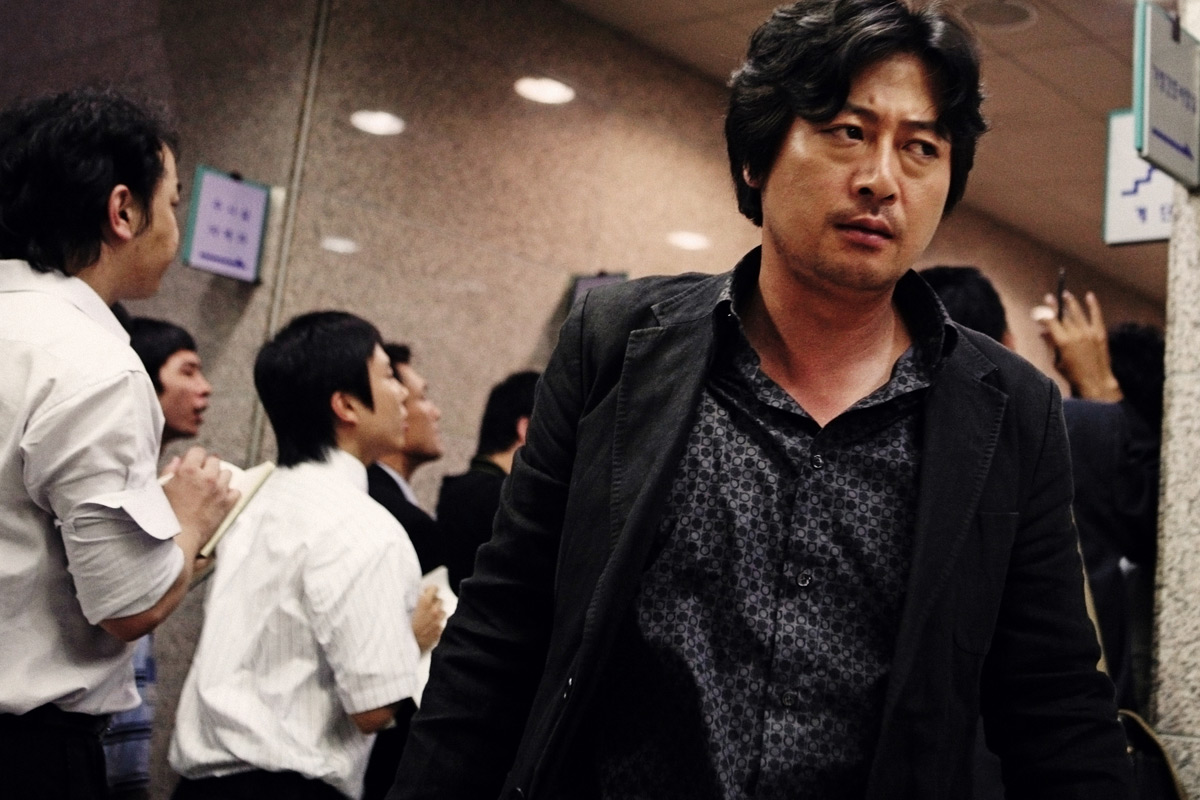
I'll go this way...
 vaguely-offensive