
 4 gibbles out of 5

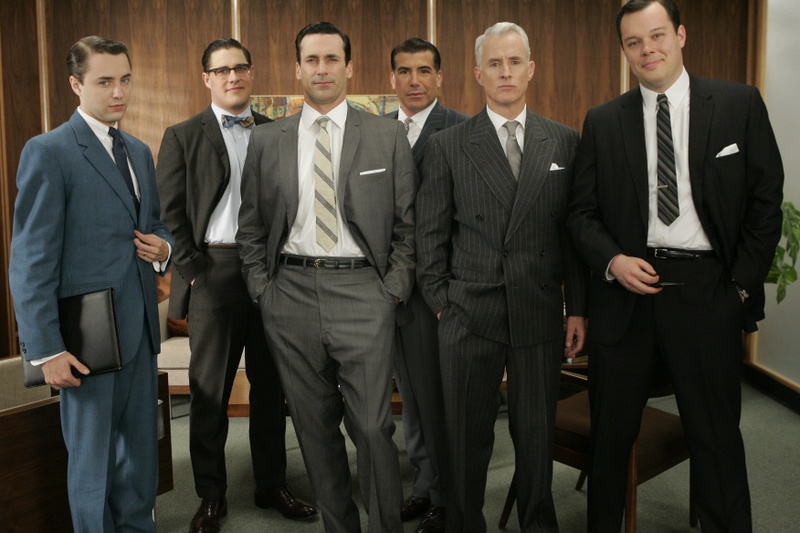
Oh, …those… people.
Directors: TV peoples
I guess Mad Men is an example of an excellent TV show – well written, well acted, respectful to its audience, and willing to develop its story and characters in dramatic ways. It’s also an example of what television does first and foremost – extend the viewing experience indefinitely to the point of pointlessness.
So Mad Men is about ad man Don Draper in the early 60s, ‘happily’ married and successfully employed as creative director for a Madison Avenue ad firm. But why is Don’s past a mystery? Why do some people call him Richard? Will his dream lifestyle collapse under his multiple affairs with women left and right?
Jon Hamm’s smooth representation of Draper lulls the viewer in, along with a dedicated production that focuses on a few main sets and its cast to keep it real without having to branch out onto city streets to convince us that we’re in the past. We, as viewers, are also suckers for period pieces that are recognizable – medieval times or colonial times are tough sells, but give us something that can echo modern times’ explosion of sex and celebrity and more than likely you’ll get a boatload of viewers pre-sold as they’ve been posting “I wish I was born in X era” on their social media twittersplasms since they turned pubescent. If I sound critical, I am. I hate television most of the time, and I hate myself for watching it during that same time. Movies are entertainment as well, this I appreciate, but it’s a decision to stay until the end. The movies that lean more toward candy – flashy colors and big names that swing us through to a fake conclusion that only promises a sequel in less than a year – are closer to what I do not like about TV, namely that it easily devolves into being “besides the point” – whatever you set out to do is accomplished, more than likely, in season 1, and the rest that follows is just a breadcrumb trail to prevent cancellation.
But those are 4 gibbles you see, yes? Well, and that’s because Mad Men is, as mentioned, excellent. It has some of the most respectful writing I’ve seen in terms of respecting frequent viewers – characters and situations that float through season to season aren’t rehashed for the unfamiliar. At the same time, the general ad men (and women) format is open enough that you can hop on at any time and at least follow the feelings. All of the characters are perfectly cast and keeping the show in realish time – ageing characters and the calendar from year to year – gives it a sense of momentum that most television lacks. While there are plot lines mapped in the background, we can ignore this and just go with the flow of the show, as life goes on in the Mad Men world at all times.
It does lose some of its magic, however. While the basic premise of seeing what havoc the lifestyle of big money sales can cause, we get through our low points in season 3 and then it’s just more of the same. Things are still evolving, but it begins to show its television roots, perhaps once the show was signed for three more seasons…
So. I have a bias against television. Progress can be made with shows like Breaking Bad, that go into the business with an agenda that can only extend a certain amount of seasons. Some shows, like Mad Men, can distract us from the show’s inherent need for ratings by being smartly written and well presented and not trashy (which, despite the sex and drugs, Mad Men rarely is). But once all is said, all is said, and then it’s just a continual week by week bid to keep us watching. The intelligence is still there, but look twice and the point seems to disappear.
 vaguely-offensive